Parents, let’s stop frightening our children
What Are We Writing on Our Children’s Chalkboards?
Think of your child’s mind and emotions as a chalkboard. As parents, we have an enormous influence over what is written there—impressions that help shape who our children are today and who they will become tomorrow. Imagine a split-screen image. On one side, a frightened child reacts to a ghost prank while adults laugh. On the other, a chalkboard displays the qualities we hope to nurture:
HONESTY. COURAGE. KINDNESS. CRITICAL THINKING. COMPASSION. ACADEMIC EXCELLENCE. FORGIVENESS.
What a beautiful foundation upon which to build a child’s life! Now imagine one more word scrawled across that board in a strange, unsettling font: FEAR. It doesn’t belong. The contrast invites us to consider whether a moment intended as entertainment leaves an impression we never meant to write.
An Appeal, Not an Attack
Please understand my heart. I am not writing to condemn anyone's parenting skills. We have some extraordinary mothers and fathers who genuinely love their children and want the very best for them. My concern is that a prank intended to create laughter may feel very different to the child experiencing it. I am asking us to look beyond the joke and consider the impression it may leave.
Why This Is So Personal to Me
My passion concerning this matter comes from a painful childhood experience. Growing up, we lived just two blocks from a neighborhood funeral home. I vividly remember its three-car brick garage, the hearses parked inside, and the old, discarded caskets. On one occasion, I even saw a human bone—a femur. The older children frightened us with stories of the dead returning to haunt anyone who had wronged them. They insisted that the only way to escape this “curse” was to view the person’s body after death. When a man whose dogs I had taunted with a stick passed away, I was terrified. Believing those stories, two other children and I approached the funeral home’s concrete porch to do what we thought was penance. I took one glance through the screen door, saw the outline of the man lying in his casket, and bolted. Hyperventilating and scared witless, I hid until sundown. That night, I went to bed tormented by thoughts of being haunted. God later revealed to me that, in that moment, a spirit of fear had entered my soul—a force that would follow me for approximately four decades.
It was not until God delivered me that I began to recognize how much of my life had been dominated by that fear. The realization was nothing short of an epiphany—a profound revelation of a connection I had never understood. Imagine—a frightening childhood experience had cast a shadow over nearly forty years of my life! That is why, when I watch these videos and hear the desperate screams of frightened children, I am deeply troubled. In my own life, fear introduced in childhood followed me into adulthood, affecting my peace and confidence. A prank may last thirty seconds, but its emotional consequences can last far longer.
Would You Allow a Teacher to Do This?
Suppose your child came home from school crying hysterically because a teacher had deliberately turned off the classroom lights, played terrifying music, or staged a frightening prank. Wouldn't you demand an explanation? Wouldn't you question why someone entrusted with your child's care deliberately subjected them to fear? Most parents would understandably want answers. Now consider the same behavior at home—the place where we want our children to feel safest. A home should be a sanctuary of love, security, encouragement, and protection. Yet in some of these videos, frightened children desperately try to escape while adults hold the doors shut.
Seeing the Experience Through the Child’s Eyes
The child is screaming. The child is panicking. The child is desperately pleading to escape. Yet the parent, believing it is all in fun, is laughing. But what is funny to an adult may be genuinely terrifying to a developing mind. To a frightened child, a locked or blocked door may feel like a trap. When a parent does not respond to cries for help, the child may feel alone or unprotected. Laughter, though intended playfully, may feel like mockery in a moment of genuine distress. ANXIETY. DISTRUST. INSECURITY. ABANDONMENT. TERROR. HUMILIATION. BETRAYAL.
These are not the impressions a loving parent intends to leave upon the chalkboard of a child’s soul. Yet a playful intention and a frightening experience can exist in the same moment.My appeal is not to question anyone’s love for their children, but to encourage us to pause, offer reassurance, and see the experience through their eyes.
What Their Words Reveal
Other children respond differently. Rather than appearing frightened, they hurl the F-word and B-word at the ghost without hesitation. Their language raises a separate concern: What words and examples are surrounding our children? This, too, brings us back to the chalkboard. What are we allowing to take root in their hearts and minds? Words absorbed can become words repeated. The invitation is not simply to correct what comes out, but to consider what is going in.
My Spiritual Concern
As a minister of the Gospel, I also recognize a spiritual dimension to fear. Scripture declares: "For God hath not given us the spirit of fear; but of power, and of love, and of a sound mind." — 2 Timothy 1:7 (KJV)I believe tormenting fear belongs to the kingdom of darkness, not the kingdom of God. It is contrary to the peace, love, and security I want our children to know. That conviction has shaped the choices I have made in my own home.
The Inheritance I Wanted to Leave My Children
Because of my own childhood experiences, I determined that my children would not have to walk on the same eggshells of fear that followed me for so many years. Many nights, as I tucked them into bed, I would have them repeat the words of Psalm 27:
“The LORD is my light and my salvation; whom shall I fear? the LORD is the strength of my life; of whom shall I be afraid?” —
I wanted those words engraved upon their hearts. I wanted them to know courage instead of terror, security instead of anxiety, and faith instead of fear. That was one inheritance I was determined to leave them!
This conviction also shaped our decision not to celebrate Halloween. We did not dress our children as ghosts or spooks, distribute candy, or participate in the festivities. I understand that not everyone shares my convictions concerning Halloween. For me, its association with darkness, death, and frightening imagery conflicted with what I wanted to nurture in our home. My family chose not to participate.
Parents, Please Hear My Plea!
There are countless ways to bring laughter, excitement, and unforgettable memories into our homes. Play games. Tell stories. Enjoy family outings. Laugh together and make wonderful memories. Teach children to laugh with others, not at their distress. But please, do not make your child's terror the source of your entertainment. We cannot always control what the world writes upon the chalkboards of our children's lives. But surely we can be intentional about what we write upon them ourselves.
Let us write LOVE instead of fear.
SECURITY instead of abandonment.
COURAGE instead of terror.
TRUST instead of betrayal.
And JOY instead of torment.
The child we nurture today becomes the adult who remembers tomorrow. Parents, when we know better, we can do better!
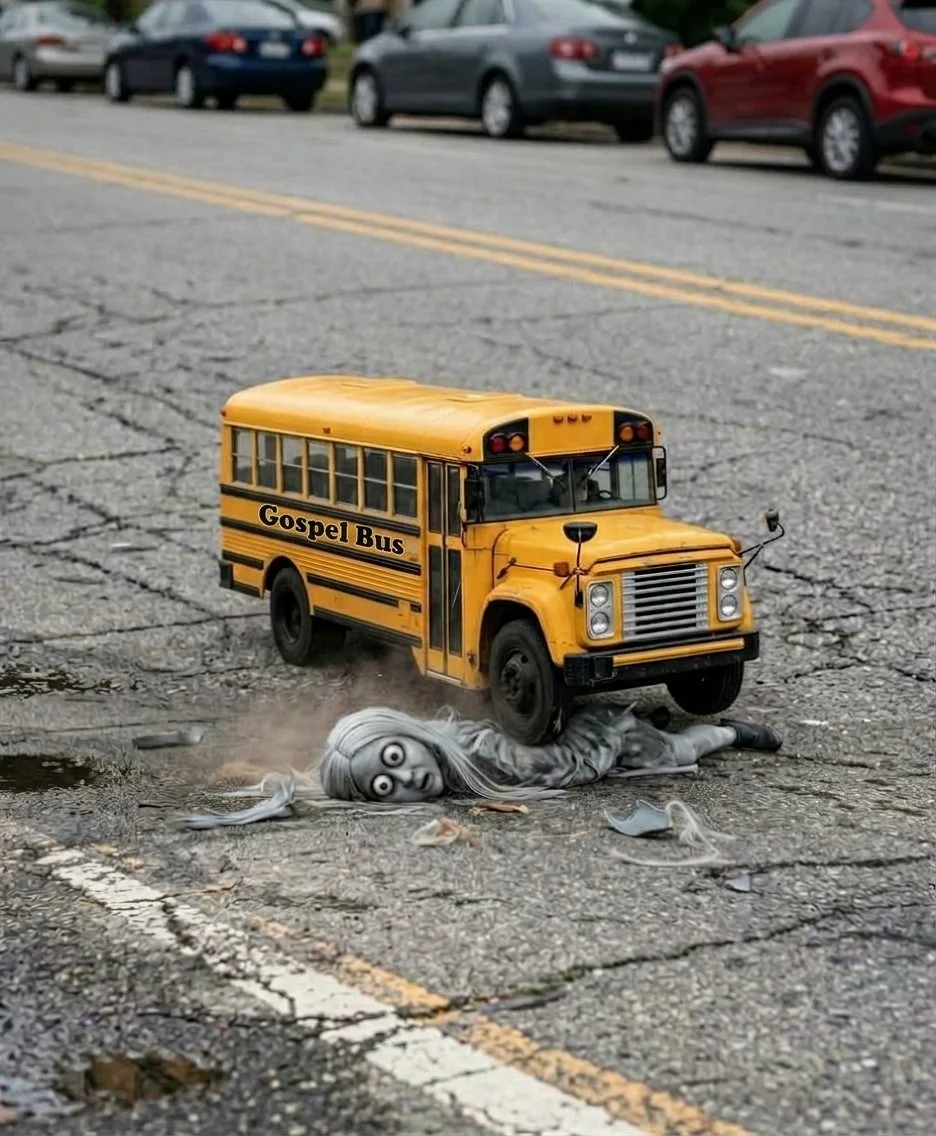
And as for Gale the Ghost and these frightening TikTok challenges?
Let's throw Gale the Ghost under the bus!